
The answer depends on several factors: the type of drug, the amount you allegedly possessed, your criminal history, and which state you’re in. While some drug possession charges are misdemeanors, many are felonies that carry serious penalties including prison time, substantial fines, and long-lasting consequences for your future.
Understanding Controlled Substances
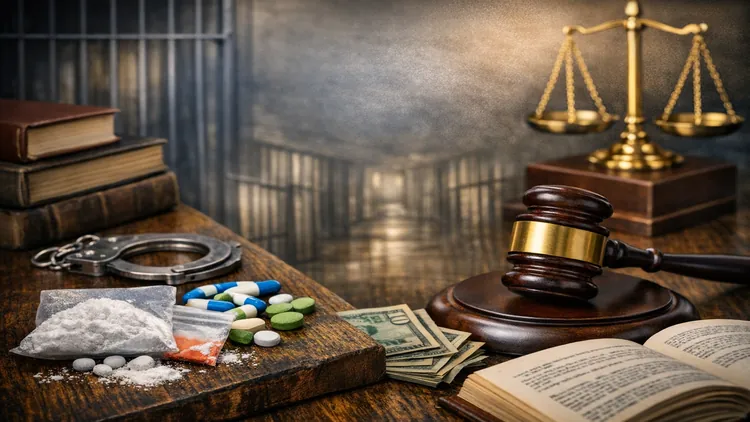
Controlled substances are drugs that the government regulates due to their potential for abuse and medical value. They’re divided into five schedules:
Schedule I: Drugs with high abuse potential and no accepted medical use (heroin, LSD, marijuana under federal law, ecstasy)
Schedule II: Drugs with high abuse potential but accepted medical uses (cocaine, methamphetamine, fentanyl, oxycodone)
Schedule III: Moderate abuse potential with accepted medical uses (anabolic steroids, some barbiturates)
Schedule IV: Lower abuse potential with accepted medical uses (Xanax, Valium, Ambien)
Schedule V: Lowest abuse potential, often available over-the-counter in limited quantities (cough medicines with small amounts of codeine)
Generally, possession of Schedule I and II substances carries the harshest penalties, while Schedule V substances have the lightest penalties.
What Prosecutors Must Prove
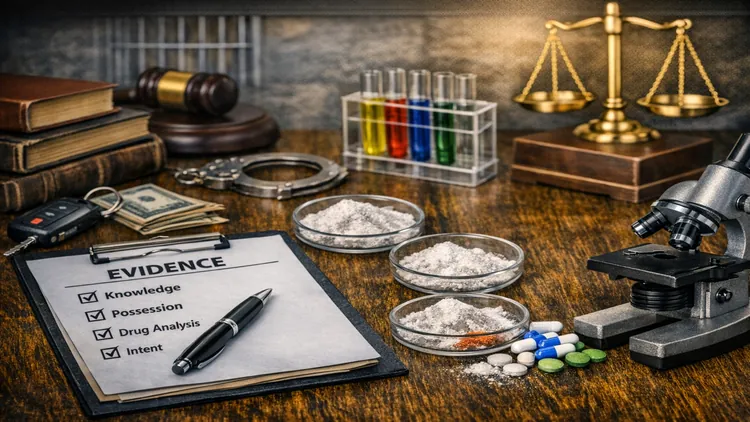
To convict someone of drug possession, prosecutors must establish:
- Knowledge: You knew the substance was present and knew it was an illegal drug.
- Possession: You had actual physical control or constructive possession (like drugs in your car or home).
- Substance Identity: The substance was actually an illegal controlled substance, typically proven through lab testing.
- Intent: In some cases, prosecutors must prove you intended to possess the drugs (not just that they were accidentally in your possession).
Ohio Controlled Substance Laws
Ohio classifies drug possession offenses based on the type and amount of substance involved.
Ohio Felony Possession Charges:
- First-Degree Felony: Possession of 100+ grams of heroin or fentanyl, carrying 3-11 years in prison and up to $20,000 in fines
- Second-Degree Felony: Possession of 20-100 grams of heroin/fentanyl or 50+ grams of cocaine, carrying 2-8 years imprisonment
- Third-Degree Felony: Possession of 5-20 grams of heroin/fentanyl or 10-50 grams of cocaine, carrying 9 months to 5 years
- Fourth-Degree Felony: Possession of 1-5 grams of heroin/fentanyl or 1-10 grams of cocaine, carrying 6-18 months
- Fifth-Degree Felony: Possession of less than 1 gram of heroin/fentanyl or cocaine, carrying 6-12 months
- Misdemeanor Charges: Possession of small amounts of marijuana (under 100 grams) is typically a minor misdemeanor with fines only.
Kentucky Controlled Substance Laws
Kentucky takes a different approach, focusing more on the type of substance than specific weight amounts for many drugs.
Kentucky Felony Possession Charges:
- Class C Felony: Possession of Schedule I or II substances (except marijuana), carrying 5-10 years imprisonment
- Class D Felony: Possession of certain amounts of marijuana (8 ounces or more) or Schedule III substances, carrying 1-5 years imprisonment
- Class A Misdemeanor: Possession of small amounts of marijuana (less than 8 ounces) or Schedule IV substances, carrying up to 12 months in jail
- Class B Misdemeanor: Possession of Schedule V substances, carrying up to 90 days in jail
Kentucky also has enhanced penalties for possession near schools, involving minors, or for repeat offenders.

Factors That Increase Penalties
- Prior Convictions: Repeat drug offenses often carry enhanced penalties, including mandatory minimum sentences.
- Location: Possession near schools, parks, or other protected areas can elevate charges.
- Amount: Larger quantities may result in trafficking or distribution charges rather than simple possession.
- Weapons: Having firearms during drug possession can lead to additional federal charges.
- Paraphernalia: Drug equipment found with substances can result in additional charges.
Common Defenses to Possession Charges
- Illegal Search and Seizure: Police must have proper justification to search you or your property. Violations of Fourth Amendment rights can result in evidence suppression.
- Lack of Knowledge: You didn’t know the substance was present or didn’t know it was illegal. This often applies when drugs are found in shared spaces or vehicles.
- Constructive Possession Challenges: Prosecutors must prove you had control over substances found in areas you don’t exclusively control.
- Chain of Custody Issues: Evidence must be properly handled and documented from seizure to trial. Gaps can lead to dismissal.
- Lab Testing Problems: Substances must be properly tested to prove they’re illegal drugs. Procedural errors can invalidate results.
- Medical Marijuana: In some cases, valid medical marijuana cards or prescriptions can provide defenses.
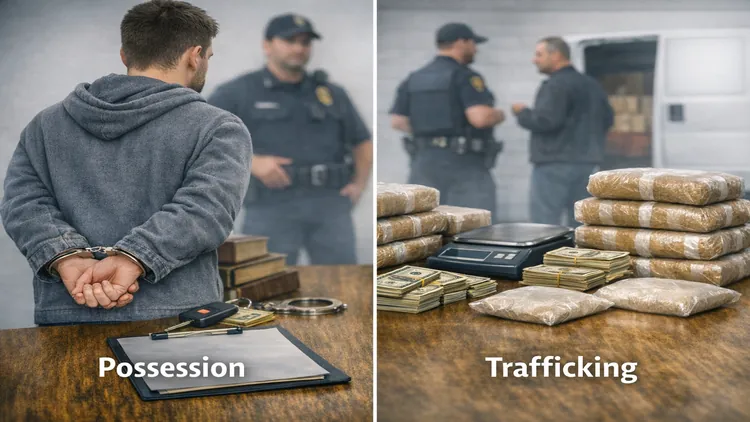
The Difference Between Possession and Trafficking
- Simple Possession: Having drugs for personal use, typically smaller amounts.
- Possession with Intent to Distribute: Having larger amounts or evidence suggesting sales (scales, baggies, large cash amounts).
- Trafficking: Moving drugs or possessing very large quantities, carrying much harsher penalties.
The line between these charges often depends on the amount possessed and surrounding circumstances.
Collateral Consequences of Felony Drug Convictions
Beyond prison time and fines, drug felony convictions can result in:
- Employment Difficulties: Many employers conduct background checks and may not hire people with drug felonies.
- Housing Problems: Landlords often refuse to rent to people with drug convictions.
- Student Aid Loss: Federal financial aid can be suspended or revoked for drug convictions.
- Professional License Issues: Many professional licenses can be suspended or denied.
- Immigration Consequences: Non-citizens can face deportation for drug felony convictions.
- Driver’s License Suspension: Many states automatically suspend licenses for drug convictions, even those unrelated to driving.
Drug Court and Alternative Sentencing
Many jurisdictions offer drug court programs for first-time or non-violent offenders. These programs typically involve:
- Intensive supervision and monitoring
- Mandatory drug treatment and counseling
- Regular court appearances
- Community service requirements
- Completion rewards like dismissed charges or reduced sentences
Successfully completing drug court can help avoid felony convictions and the associated long-term consequences.
The Importance of Early Legal Intervention
Drug possession cases often involve constitutional issues that require immediate attention:
- Evidence Suppression Motions: Challenging illegal searches must be done early in the process.
- Plea Negotiations: Early attorney involvement can lead to better deals before prosecutors become invested in the case.
- Alternative Programs: Many diversion programs have deadlines or require early application.
- Investigation: Independent testing of substances and investigation of police procedures takes time.

What NOT to Do If Charged
- Don’t Talk to Police: Exercise your right to remain silent and request an attorney immediately.
- Don’t Consent to Searches: You have the right to refuse searches in most situations.
- Don’t Dispose of Evidence: This can lead to additional charges like obstruction of justice or tampering with evidence.
- Don’t Miss Court Dates: Failure to appear can result in additional charges and warrants.
- Don’t Try to Handle It Alone: Drug charges are too serious and complex for self-representation.
Why You Need Experienced Legal Representation
Drug possession laws are complex and constantly changing. Penalties vary dramatically based on numerous factors, and the consequences extend far beyond the courthouse. You need an attorney who understands:
- The scientific aspects of drug testing and analysis
- Constitutional search and seizure law
- Local prosecutors and their negotiation practices
- Alternative sentencing options and drug courts
- How to minimize long-term consequences
Protecting Your Future
A drug possession charge doesn’t have to ruin your life, but how you handle it from the beginning can make all the difference. The prosecution has experienced attorneys and scientific experts working to convict you—you need equally skilled representation fighting for your rights.
At Monohan & Monohan, we have extensive experience defending clients against all types of drug possession charges. We understand the science behind drug testing, the constitutional requirements for searches, and the local court systems in Ohio and Kentucky. Our goal is not just to defend against the current charges, but to protect your future opportunities and freedom.
Don’t let a drug possession charge derail your life. Contact us immediately for a confidential consultation to discuss your case and explore all available options. The sooner we begin working on your defense, the better we can protect your rights and your future.
This information is for educational purposes only and does not constitute legal advice. Drug possession laws are complex and change frequently. Each case involves unique circumstances that affect potential charges and outcomes.
