
Absolutely. While petty theft might sound minor, it’s still a criminal charge that can have serious consequences for your future. Many people think they can handle these cases themselves or that the penalties won’t be that severe, but this is a costly mistake. Even a “minor” theft conviction can affect your employment, housing, education, and reputation for years to come.

Why Petty Theft Isn’t Actually “Petty”
The word “petty” makes this charge sound insignificant, but don’t be fooled. Petty theft is still a crime that results in a permanent criminal record. Even though it involves smaller dollar amounts than grand theft, the consequences can be life-changing.
- It’s Still a Crime: Petty theft appears on background checks just like any other criminal conviction, affecting job applications, housing rentals, and educational opportunities.
- Escalating Penalties: Second and third petty theft convictions carry much harsher penalties, including potential jail time.
- Professional Consequences: Many professional licenses and certifications can be affected by theft convictions, no matter how small the amount.
- Character Questions: Theft convictions raise questions about honesty and trustworthiness that can follow you for decades.
What Counts as Petty Theft?
Petty theft generally involves taking someone else’s property without permission when the value is below a certain threshold. Common examples include:
- Shoplifting items from retail stores
- Taking money from an employer’s cash register
- Stealing personal items from coworkers or classmates
- Removing merchandise from someone’s property
- Taking items from unlocked vehicles
- Pocketing items at yard sales or flea markets without paying
The key elements prosecutors must prove are that you intentionally took someone else’s property without permission and intended to permanently deprive them of it.

Petty Theft Laws in Ohio and Kentucky
Ohio Theft Penalties
Ohio classifies theft offenses based on the value of property involved:
- Fifth-Degree Felony: Theft of property worth $1,000 to $7,500, carrying 6-12 months in jail and up to $2,500 in fines.
- First-Degree Misdemeanor: Theft of property worth $1,000 or less, carrying up to 180 days in jail and $1,000 in fines.
- Enhanced Penalties: Multiple theft convictions can elevate charges regardless of individual amounts. Three or more theft offenses can result in felony charges even for small amounts.
Ohio also has specific shoplifting penalties that can include civil liability to store owners separate from criminal charges.
Kentucky Theft Penalties
Kentucky divides theft into degrees based on property value:
- Theft by Unlawful Taking (Under $500): Class A misdemeanor carrying up to 12 months in jail and $500 in fines.
- Theft by Unlawful Taking ($500-$10,000): Class D felony carrying 1-5 years in prison and up to $10,000 in fines.
- Enhanced Penalties: Prior theft convictions can elevate subsequent charges, and repeat offenders face increasingly harsh penalties.
Kentucky also allows merchants to pursue civil remedies against shoplifters, potentially doubling or tripling the financial consequences.
Hidden Consequences You Might Not Expect
- Employment Screening: Most employers conduct background checks, and theft convictions often disqualify candidates, especially for positions involving money, merchandise, or customer trust.
- Housing Applications: Many landlords refuse to rent to people with theft convictions, viewing them as potential risks for stealing from other tenants or damaging property.
- Educational Opportunities: Colleges and universities may deny admission or financial aid based on criminal convictions, particularly those involving dishonesty.
- Professional Licenses: Nurses, teachers, accountants, real estate agents, and many other professionals can lose their licenses for theft convictions.
- Security Clearances: Government jobs and contractor positions requiring security clearances are often unavailable to people with theft convictions.
- Immigration Issues: Non-citizens can face deportation or denial of citizenship applications for theft convictions.
What a Lawyer Can Do for Your Petty Theft Case
- Challenge the Evidence: Examine video footage, witness statements, and physical evidence to identify weaknesses in the prosecution’s case.
- Question Intent: If you intended to pay for items or believed you had permission to take them, this challenges a key element prosecutors must prove.
- Negotiate Alternative Resolutions: Experienced attorneys can often negotiate for dismissals, reduced charges, or alternative sentencing that avoids conviction.
- Explore Diversion Programs: Many jurisdictions offer first-offender programs that can result in dismissed charges upon completion.
- Protect Your Record: Even if conviction is unavoidable, attorneys can often negotiate for outcomes that minimize long-term consequences.
- Handle Civil Claims: Stores often pursue separate civil liability claims that can be more expensive than criminal fines. Attorneys can negotiate these as well.
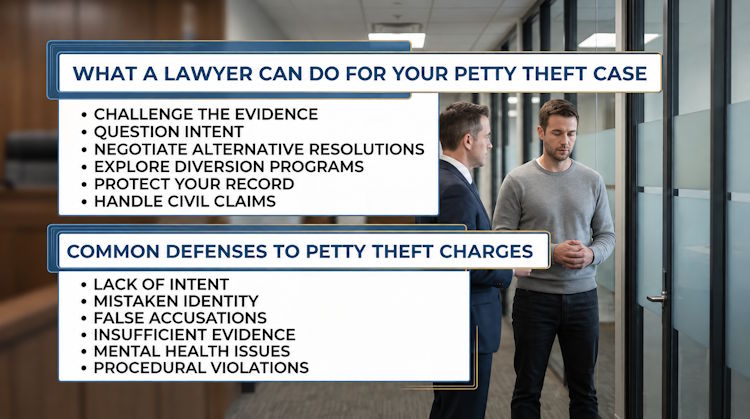
Common Defenses to Petty Theft Charges
- Lack of Intent: You didn’t intend to steal—perhaps you forgot to pay, thought someone else was paying, or believed you had permission.
- Mistaken Identity: Store security or witnesses identified the wrong person, especially in crowded retail environments.
- False Accusations: Sometimes people are wrongly accused by store employees, security guards, or other customers.
- Insufficient Evidence: Prosecutors must prove their case beyond reasonable doubt. Poor quality video, unreliable witnesses, or missing evidence can lead to dismissal.
- Mental Health Issues: Certain mental health conditions can affect intent and may provide grounds for alternative resolutions.
- Procedural Violations: If store security or police violated your rights during detention or investigation, evidence might be suppressed.
The Shoplifting Process and Your Rights
Understanding what happens during a shoplifting incident can help protect your rights:
- Detention by Store Security: Stores can detain suspected shoplifters, but only with reasonable suspicion and for reasonable periods.
- Police Involvement: Once police arrive, you have the right to remain silent and request an attorney.
- Civil Demands: Stores often send letters demanding payment separate from criminal charges. These should be reviewed by an attorney.
- Court Proceedings: Even simple cases involve multiple court dates and complex legal procedures.

Why Public Defenders Aren’t Always Enough
While public defenders are dedicated professionals, they face limitations that can affect your case:
- Heavy Caseloads: Public defenders often handle hundreds of cases simultaneously, limiting time available for each case.
- Resource Constraints: Limited resources for investigation, expert witnesses, or extensive case preparation.
- Eligibility Requirements: Many middle-income people don’t qualify for public defenders despite the significant cost of hiring private counsel.
- Specialization: General public defenders may lack specific experience with theft cases and local prosecutor practices.
Early Intervention Makes a Difference
- Pre-Filing Negotiations: Sometimes attorneys can prevent charges from being filed at all by working with prosecutors early in the process.
- Evidence Preservation: Video footage and witness memories fade quickly. Early legal involvement helps preserve favorable evidence.
- Damage Control: Quick action can sometimes limit the spread of information about arrests, protecting your reputation.
- Civil Settlement: Early resolution of civil claims can sometimes influence criminal case outcomes.
First-Time Offender Programs
Many jurisdictions offer special programs for people with no prior criminal record:
- Diversion Programs: Complete community service, counseling, or education programs in exchange for dismissed charges.
- Deferred Prosecution: Charges are held in abeyance while you complete certain requirements, then dismissed.
- Conditional Discharge: Plead guilty but receive no conviction if you complete probation successfully.
- Expungement Opportunities: Some programs allow you to remove the arrest and charges from your record entirely.
These programs often have strict eligibility requirements and application deadlines that require legal assistance to navigate properly.

The Real Cost of Trying to Handle It Yourself
- Permanent Criminal Record: Convictions stay on your record permanently in most cases, affecting you for decades.
- Maximum Penalties: Judges often impose harsher sentences on unrepresented defendants.
- Missing Opportunities: You might miss chances for alternative resolutions or program eligibility.
- Civil Liability: Store civil claims can result in damages far exceeding the value of stolen merchandise.
- Future Consequences: A conviction makes any future legal problems much more serious.
What to Do If You’re Charged
- Don’t Talk to Police: Exercise your right to remain silent and request an attorney immediately.
- Don’t Sign Anything: Store security might ask you to sign statements or agreements. Wait for legal advice.
- Preserve Evidence: Keep receipts, witness contact information, and any other evidence that might help your case.
- Don’t Miss Court Dates: Failure to appear results in additional charges and warrants.
- Get Legal Help Immediately: Early intervention provides the most options for favorable outcomes.
Questions to Ask When Choosing an Attorney
Protecting Your Future
Petty theft charges might seem minor, but they can have major consequences for your future. Don’t let a momentary mistake or false accusation derail your career, education, or life opportunities.
At Monohan & Monohan, we understand that good people sometimes find themselves facing theft charges through misunderstandings, poor judgment, or false accusations. We’ve successfully defended hundreds of clients against theft charges, often achieving dismissals, reduced charges, or alternative resolutions that protect their futures.
Our experience with local courts, prosecutors, and diversion programs gives us the knowledge needed to pursue the best possible outcome in your case. We handle both the criminal charges and any civil claims, providing comprehensive protection for our clients.
Don’t face these charges alone or assume they’ll go away on their own. Contact us immediately at 859-283-1140 for a confidential consultation to discuss your case and explore all available options for protecting your record and your future.
This information is for educational purposes only and does not constitute legal advice. Each theft case involves unique circumstances that affect potential charges, defenses, and outcomes.
