
If you’ve bought an e-bike for commuting around Cincinnati or exploring the trails in Northern Kentucky, you’ve probably noticed it wasn’t cheap. A quality e-bike often runs $1,500 to $5,000 or more, yet unlike a car, Ohio and Kentucky don’t require you to insure it. That leaves a lot of riders asking the obvious follow-up question: is e-bike insurance worth it if it’s not legally required? At Monohan & Monohan, we see the aftermath of e-bike accidents often enough to have a clear answer, and it’s more nuanced than a simple yes or no.
Is E-Bike Insurance Worth It? The Short Answer
For most riders, yes, it’s worth serious consideration, especially if you ride regularly, commute in traffic, or own a higher-value e-bike. Insurance isn’t mandatory in either state, but that’s exactly the problem. Without it, you’re personally on the hook for theft, damage, and any injuries or property damage you cause while riding. A policy that costs less than $10 a month can be the difference between a minor inconvenience and a five-figure financial hit.
Why Your Existing Insurance Probably Won’t Help
A lot of riders assume their existing coverage has them protected. In most cases, it doesn’t.
Homeowners and Renters Policies
Most homeowners and renters insurance policies exclude “motorized vehicles” from both liability and personal property coverage. Because e-bikes have a motor, many insurers now classify them the same way, even though the bike itself looks and rides like a traditional bicycle. That means a stolen e-bike, or an accident you cause while riding one, may not be covered the way a stolen laptop or a traditional bicycle accident would be.
Auto Insurance
Auto insurance won’t fill the gap either. Most policies define an “insured auto” as a four-wheeled vehicle, which leaves e-bikes out entirely. If you cause an accident on your e-bike, your car insurance company will typically deny the claim outright, regardless of how careful you normally are behind the wheel.
What Does E-Bike Insurance Actually Cover?
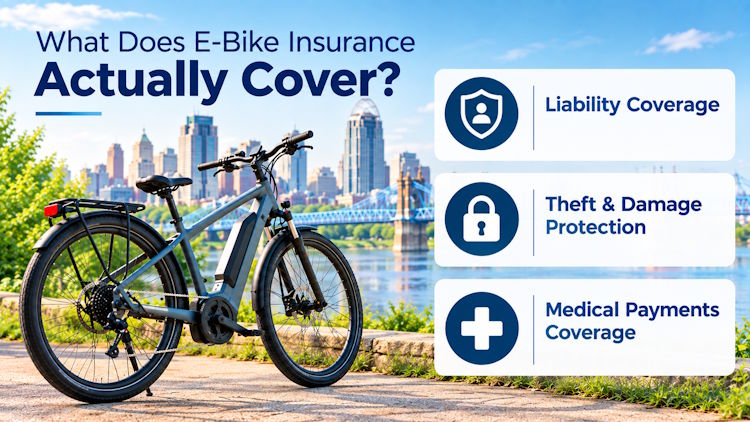
Standalone e-bike policies are built specifically to close this gap, and most offer three core types of protection.
Liability Coverage
This is often the most important piece. Liability coverage protects you financially if you injure someone or damage their property while riding. Given that medical bills and legal costs from even a moderate accident can run into the tens of thousands of dollars, this coverage alone can justify the cost of a policy.
Theft and Damage Protection
E-bike theft has climbed sharply in recent years, driven partly by the resale value of batteries and motors. Standalone policies typically cover theft from your home, a public bike rack, or even a locked vehicle, along with accidental damage from crashes or weather. Some insurers reimburse based on your original purchase price rather than depreciated value, which matters if you’ve owned the bike for a year or two.
Medical Payments Coverage
Many policies also include coverage for your own medical expenses after a riding accident, regardless of who was at fault. This can help cover urgent care visits, ER bills, or follow-up treatment without waiting on a liability dispute to get resolved.
How Much Does E-Bike Insurance Cost?
Pricing varies by provider, coverage level, and the value of your bike, but dedicated e-bike insurance typically runs somewhere between $100 and $300 a year, and liability-only coverage can start even lower. Compared to the cost of replacing a stolen $3,000 e-bike or covering an injured pedestrian’s medical bills out of pocket, the annual premium is modest for the protection it provides.
Who Should Seriously Consider It?
E-bike insurance makes the most sense for:
- Riders who commute daily or use their e-bike in mixed traffic
- Anyone who owns an e-bike valued above roughly $1,500 to $2,000
- Riders who park in public or shared spaces, where theft risk is higher
- Parents whose teens ride e-bikes, since liability exposure can extend to the household
- Anyone using an e-bike for deliveries or other commercial purposes
If your riding is occasional, your bike is lower value, and it’s always stored securely, the case for coverage is a little less pressing, though liability protection is still worth a look given how little it typically costs.
What Happens If You Skip It and Get Into an Accident?
If you’re riding uninsured and cause an accident, you’re personally responsible for the other party’s medical bills, lost wages, and property damage, with no policy standing between you and that bill. If someone else, whether it’s a driver, another cyclist, or another e-bike rider, causes an accident that injures you, the insurance picture gets complicated fast. Recovering compensation may depend on the at-fault party’s own coverage, your uninsured/underinsured motorist protection, or pursuing a personal injury claim directly.
This is exactly where having an attorney early in the process matters. Insurance companies are quick to point to exclusions and gray areas in e-bike claims, and knowing your options, whether that’s a claim against a driver’s auto policy or pursuing the at-fault rider directly, can significantly affect what you’re able to recover.
Talk to a Cincinnati and Northern Kentucky Personal Injury Attorney
Whether you’re weighing whether to buy e-bike insurance or you’re already dealing with the aftermath of an accident, Monohan & Monohan can help you understand where you stand. We’ve helped riders throughout Cincinnati and Northern Kentucky sort through confusing insurance denials and fight for fair compensation after an e-bike accident.
As a family-owned firm, we take the time to understand your situation before recommending next steps. Call us at 859-283-1140 for a consultation or reach out through our online contact form to speak with an experienced personal injury attorney today.
This blog is intended for general informational purposes only and does not constitute legal or financial advice. Insurance costs, coverage terms, and availability vary by provider and change over time. Please have an attorney and/or licensed insurance professional review this content for current accuracy before publishing, and encourage readers to consult a professional regarding their specific situation.
